Food Scrap Recycling Trials for Multi-Unit Dwellings
A major food organics recycling trial is now underway across South East Queensland, with pilots operating in Brisbane, Gold Coast, Noosa and the Sunshine Coast. This is a significant step in delivering practical solutions for a growing region.
Backed by a $4 million Queensland Government investment, the trial is designed to reduce the amount of food waste going to landfill from muilt-unit dwellings, including apartments, townhouses, resorts and retirement villages.
Explore the Initiative Below:
What is the food scrap recycling trial?
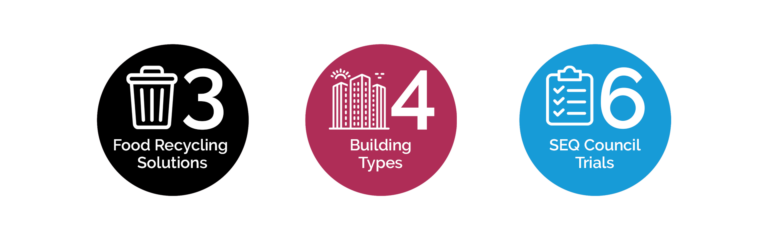
Led by the Council of Mayors (SEQ) and funded by the Queensland Government, this coordinated trial is testing three food recycling solutions, across four building types, in six council areas. Delivered over 2.5 years in partnership with participating local councils, the trial also includes a research partnership with Central Queensland University (CQU) — capturing behavioural insights into how residents and visitors engage with food recycling to help shape long-term solutions for SEQ.
As SEQ continues to grow and welcome millions of visitors each year, this trial will help ensure our waste systems can support both residents and the tourism sector.
Why should residents and visitors bother separating their food scraps?
Organic waste makes up more than a third of what Queensland households throw away. By separating food scraps, we can significantly reduce greenhouse gas emissions, reduce our reliance on landfill and support Queensland’s transition to a circular economy.
SEQ’s tourism economy means we host millions of visitors each year. That brings opportunity, but also more food waste. This trial helps ensure our tourism regions can manage waste sustainably while protecting the natural environments visitors come to experience.
This is about making recycling easier for Queenslanders — no matter where they live, how long they stay, or what type of building they call home.
Which buildings and locations are part of the trial?
The trial covers six individual pilots across four SEQ council areas — Noosa, the Sunshine Coast, Brisbane and the Gold Coast:
Sunshine Coast Council IRT The Palms Retirement Village, Buderim |IRT Parklands Retirement Village, Currimundi
Noosa Council Peppers Noosa Resort & Villas
City of Gold Coast Council Brighton on Broadwater Dune, Runaway Cove, Meriton Resort
Brisbane City Council pilots commencing later in 2026
Together, these pilots span a range of dwelling types — from over-55s lifestyle resorts and holiday accommodation to high-rise apartments — reflecting the diversity of how people live and stay across our region.
How does it work?
The trial tests three different food recycling approaches suited to high-density environments:
Dehydrators — reducing food scraps in volume on-site, for use in the garden
Anaerobic digestion — breaking down organic material to produce biogas and energy
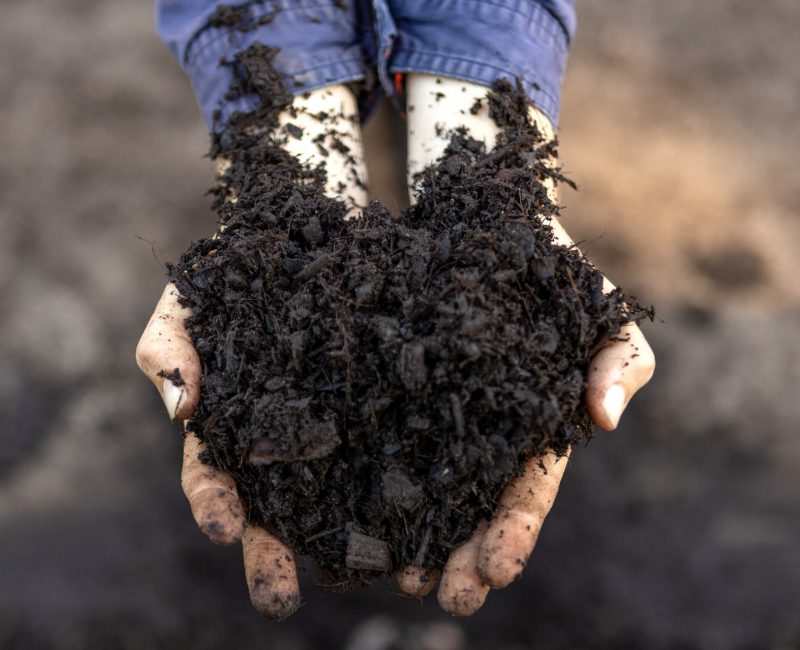
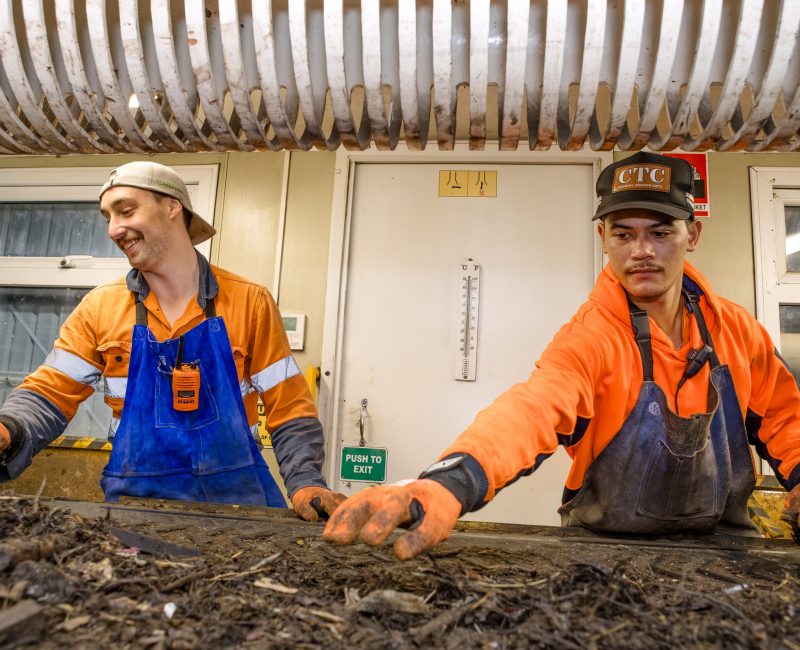
Off-site composting — processing scraps into soil and mulch
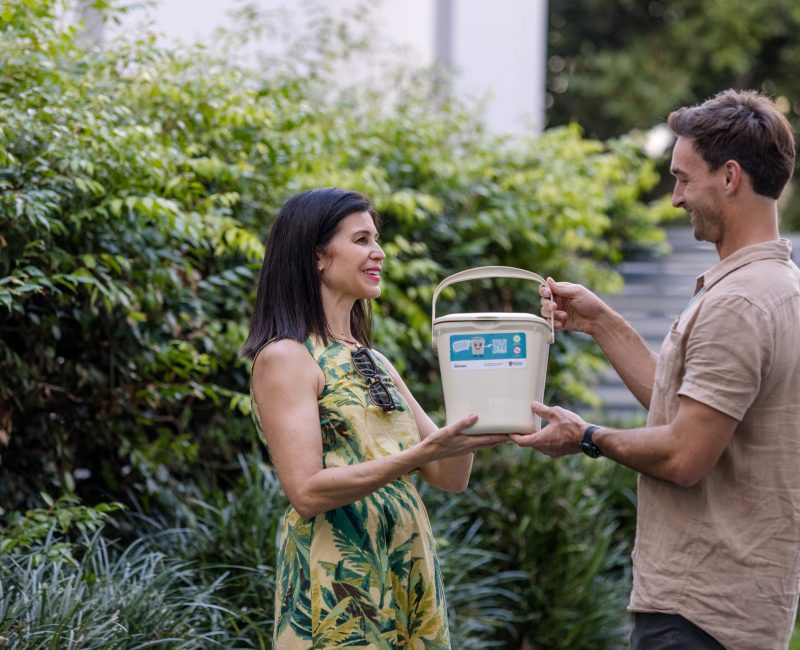
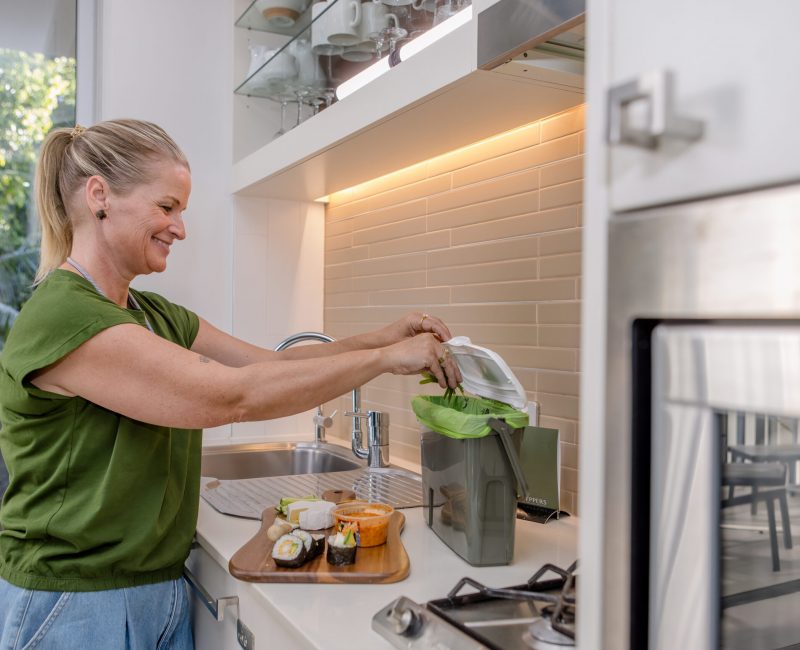
In practice, residents and guests collect food scraps using kitchen caddies. Those scraps are then collected andrecycled into organic landscaping materials — such as soil and mulch — by local processors. It’s a clear example of how local partnerships can turn everyday waste into something valuable.
Across all six pilots combined, the trial is expected to divert the equivalent of around 100 garbage trucks of food waste from landfill.
What does this mean for SEQ’s waste future?
Together, these pilots are expected to divert the equivalent of around 100 garbage trucks of food waste from landfill. The insights gained across Noosa, the Sunshine Coast, Brisbane and the Gold Coast will help shape long-term food recycling solutions for a growing SEQ population.
While the trial supports Queensland’s waste reduction targets and the SEQ Waste Management Plan, the real benefit is local — cleaner communities, reduced landfill pressure, and practical recycling options that work for residents, visitors and accommodation providers alike.
Follow SEQ's journey towards a circular economy
Food scrap recycling trial targets SEQ multi-unit and holiday living
More than 530 tonnes of food scraps from apartments, townhouses, resorts and retirement villages across South East Queensland will soon be transformed into valuable resources under a new pilot program led by the Council of Mayors (SEQ) and participating local councils.
Collaborative bid to tackle SEQ’s landfill challenge
Councils across South East Queensland (SEQ) are joining forces to address the growing landfill challenge as existing sites approach capacity and disposal costs continue to rise.
SEQ Councils & Organics Processing – Industry Brief
While there may be a general understanding that new organics kerbside collection services will be phased in over time, there is currently limited SEQ regional organics processing capacity available to support the full expansion of these services.
SEQ Mayors welcome $2.1billion State funding package for waste and recycling
The Council of Mayors (SEQ) has welcomed today’s $2.1billion funding package for waste and recycling announced by Environment Minister Meaghan Scanlon.