
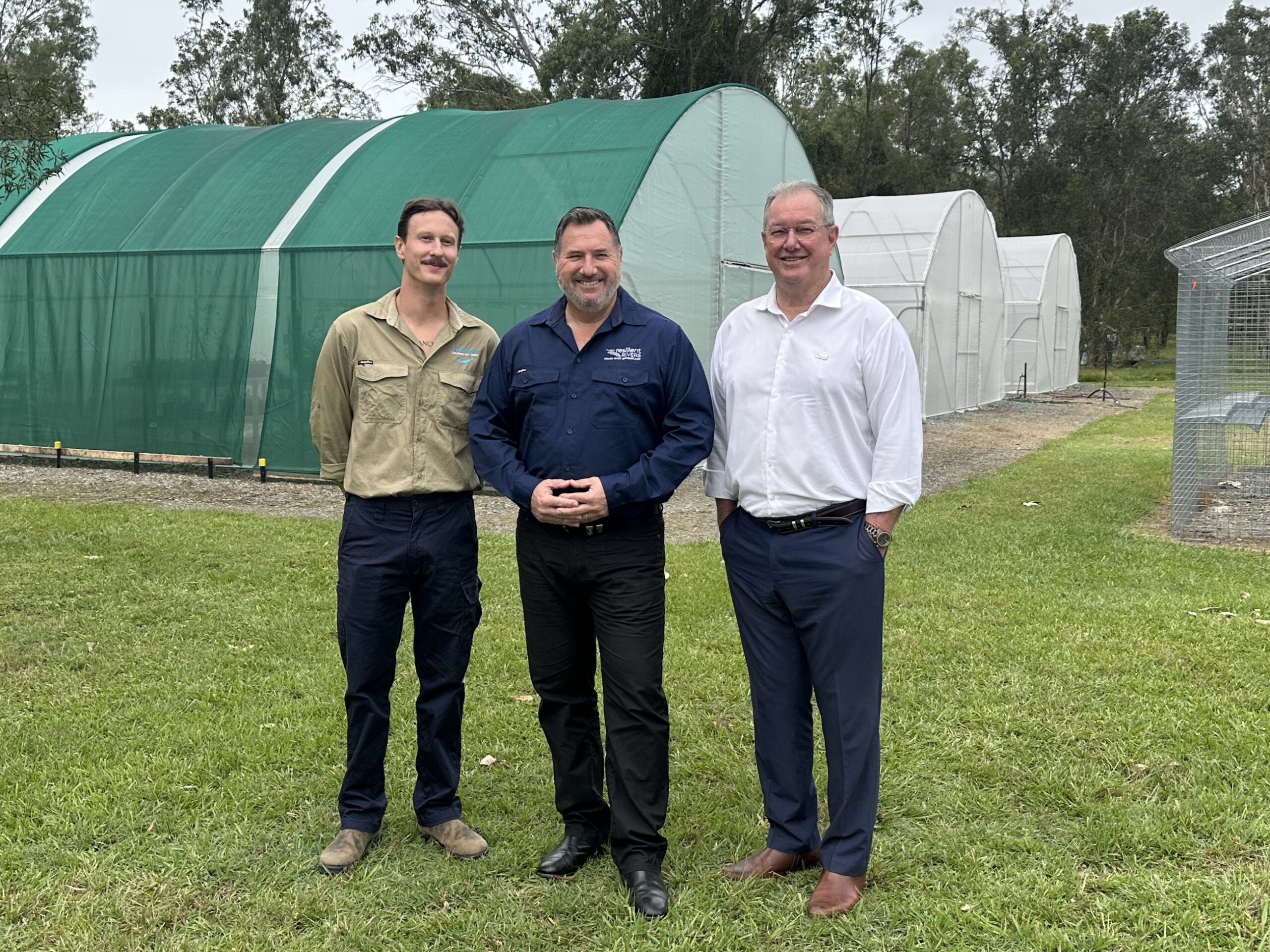
A new facility in City of Moreton Bay is set to unleash thousands of tiny environmental heroes, with beetles and bugs being bred as biological control agents to combat two of South East Queensland’s (SEQ) most destructive invasive weeds.
The Samford Biological Control Facility will mass-breed cat’s claw creeper jewel beetles, tingid bugs and madeira beetles – natural predators of fast-spreading vines that are approved for release to smother native vegetation destroying habitat for species including koalas and platypus.
Led by The Pine Rivers Catchment Association, the beetles will be released at priority locations across SEQ including sites in the Pine Rivers, Mid-Brisbane, Mary and Logan River catchments, targeting hundreds of kilometres of invasive weeds threatening ecosystem health.
Cat’s claw creeper and madeira vine are among the region’s most damaging weeds, choking riparian vegetation, threatening water quality and reducing landscape resilience.
Local volunteers from the Samford Men’s shed have supported the project by building custom ‘bug dorms’ filled with cat’s claw creeper and madeira vine to provide food for our beetles and bugs and maximise success.
Tens of thousands of the insects will be raised and monitored each year in on-site nurseries before being transferred to targeted locations across the region for release.
The biocontrol program is part of an integrated weed-management approach reducing reliance on physical and chemical control techniques while strengthening ecological balance.
The project is funded through Resilient Rivers SEQ under the SEQ City Deal, a partnership between the Australian Government, Queensland Government and Council of Mayors (SEQ).
The SEQ City Deal will invest $40 million into Resilient Rivers SEQ with $10 million each from the Australian Government, Queensland Government, Council of Mayors (SEQ) and Seqwater.
The Samford Biological Control Facility is one of more than 30 projects underway as part of Resilient Rivers’ SEQ’s $30 million two-year program to improve the health of waterways, wetlands and Moreton Bay.
The facility will distribute biocontrols, including jewel and madeira beetles and tingid bugs, in accordance with a permit issued under the Biosecurity Act 2014. It will be supported by partners including Seqwater, who will contribute to ongoing beetle supply for long?term weed control across SEQ.
For more information on the Resilient Rivers SEQ program and upcoming projects, visit: www.resilientrivers.com.au
Minister for the Environment, Tourism, Science and Innovation, Andrew Powell:
“Protecting the health of our local waterways and wildlife is a priority for the Crisafulli Government, and this new project is a clear example of that commitment in action.
“By backing community?led, science?driven solutions like this, we’re supporting nature?based approaches that weaken invasive vines and create space for native plants and wildlife to thrive, strengthening the resilience of the places Queenslanders depend on every day.”
City of Moreton Bay Mayor and Deputy Chair of the Council of Mayors (SEQ) Peter Flannery:
“We’re committed to going green as we grow, ensuring our City is more resilient and richer in biodiversity. These tiny environmental warriors will be bred in City of Moreton Bay but their impact will benefit the whole South East Queensland region. They’ll be munching on invasive weeds that damage our natural ecosystems from the dividing range to the coast and making a positive difference to our flora and fauna.”
Seqwater Catchments Asset Manager Stephanie Pruss:
“Healthy catchments are essential to healthy waterways and efficient drinking water treatment. Practical, science?based solutions improve raw water quality at the source, supporting more efficient treatment processes and protecting flora and fauna habitats. We’re proud to work alongside the Pine Rivers Catchment Association, local volunteers and government partners to deliver lasting benefits for the communities we serve.”
Spokesperson Pine Rivers Catchment Association:
“Biological control is a proven, science-based method for managing invasive species at scale. By mass-rearing these beetles, we can make a meaningful impact on some of the region’s most destructive weeds. Once established in the wild, the agents will continue their work, suppressing invasive vines and supporting healthier ecosystems.”
ENDS
Media contact: Council of Mayors (SEQ)